
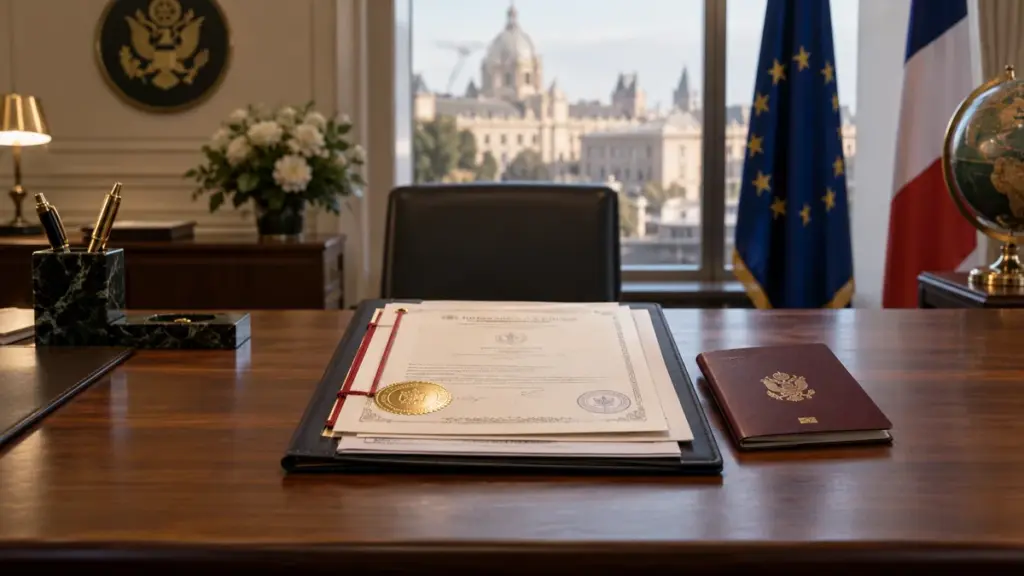
Consular Legalization Services coordinate the document-authentication chain used when an embassy or consulate must legalize a document for use abroad. This route is generally relevant when the Hague Apostille process does not apply to the issuing and receiving countries or when a particular institution requires an additional consular step. The sequence can involve notarization, authentication by national authorities, translation and embassy or consulate legalization.
Translation All World coordinates the translation-related and administrative preparation for documents that require consular legalization. Because the procedure differs by country, embassy and document type, fixed country lists quickly become unreliable. Clients should identify the issuing country, destination country, receiving institution and document category before processing begins. Written instructions from the embassy or receiving authority are especially useful. The service can then be structured around the current authentication chain rather than assuming that a procedure used for another destination will also be accepted in the present case.
What Are Consular Legalization Services?
Consular Legalization Services prepare documents for international use through an authentication chain that includes an embassy or consulate. Unlike an apostille, which is issued under the Hague Apostille Convention by a designated competent authority, consular legalization can involve several national authorities before the foreign mission adds its legalization. The exact sequence is determined by the jurisdictions involved and the type of document.
Legalization generally authenticates signatures, seals or the authority behind a document; it does not confirm the truth of the document’s substantive content. Translation is also separate. A destination may require the document to be translated before consular legalization, after legalization, or through a translator recognised by a particular authority. Notarization may also be required for a translation or private document, but it should only be inserted where the official procedure calls for it.
Translation All World treats consular legalization as a document-routing service rather than a generic “consulate translation.” This terminology is more accurate for international users because the central issue is the authentication chain. The project is planned from the destination requirement, and the translation is prepared at the point in the sequence where it will be accepted.
When Are Consular Legalization Services Required?
Consular Legalization Services may be required when the apostille route is unavailable or insufficient for the receiving institution. Countries can join or leave treaty relationships, implementation dates can change, and individual embassies can publish document-specific instructions. For that reason, relying on an old online list of “apostille countries” or “legalization countries” can produce the wrong procedure.
The table below explains the main distinction between apostille and consular legalization routes.
| Feature | Apostille Route | Consular Legalization Route |
|---|---|---|
| International basis | Hague Apostille Convention | Applicable national and diplomatic authentication procedure |
| Final international authentication | Apostille from a competent authority | Embassy or consulate legalization may be part of the chain |
| Number of steps | Often shorter | Can involve several authorities |
| Translation timing | Depends on destination instructions | Depends on embassy and receiving authority instructions |
| Best source of current rules | Competent authority and receiving institution | Embassy or consulate plus relevant national authorities |
Some documents also fall outside standard routes or require special commercial, educational or judicial certification before legalization. Translation All World therefore asks for the exact document and destination before quoting the administrative scope. The final authority remains the embassy, consulate or receiving institution that has published the requirement.
Which Documents Commonly Need Consular Legalization?
Consular legalization can apply to personal, educational, corporate and legal documents used abroad. The exact preparation differs by document type because a public certificate, notarized power of attorney and corporate record may enter the authentication chain at different points. Some private documents first need a notarial act, while public records may need certification by the authority that issued them or by another designated body.
- Civil-status documents: birth, marriage, divorce and death records for family or immigration procedures.
- Academic documents: diplomas, transcripts and educational certificates used for study or employment abroad.
- Corporate documents: registry extracts, resolutions, powers of representation and commercial records.
- Legal documents: powers of attorney, declarations, court documents and other records used in foreign proceedings.
- Employment and professional records: certificates, licences and supporting documents for overseas work.
- Medical or personal records: documents requested by a foreign authority where formal authentication is required.
The list indicates common use cases, not automatic legal requirements. A document should only be legalized through the consular route after the destination has been checked. Translation All World can prepare or translate the document in the required language and coordinate the administrative stages, but should not substitute a generic package for the embassy’s current procedure.
How Do Consular Legalization Services Work?
The correct sequence can vary significantly between destinations, so the process should begin with official instructions. A common chain may involve translation, notarization, authentication by a ministry or other national authority and then legalization by the destination country’s embassy or consulate. Another jurisdiction may require a different order or may not require translation until after legalization.
- Confirm the destination requirement: obtain current instructions from the embassy, consulate or receiving institution.
- Review the source document: determine whether it must be original, certified, notarized or issued in another acceptable form.
- Plan the translation stage: identify the required language, certification and point in the authentication sequence.
- Complete national authentication: submit the document to the relevant authorities required before consular processing.
- Complete embassy or consulate legalization: follow appointment, fee and submission rules published by the foreign mission.
- Prepare final delivery: combine the legalized document and translation in the format requested by the destination.
Translation All World can coordinate these stages where the required authorities and logistics permit. Timelines should include embassy appointments, national-authority processing and courier time, not only translation. If the embassy changes its procedure, the current official instruction should take precedence over an earlier project workflow.
What Affects the Cost of Consular Legalization Services?
The cost of Consular Legalization Services depends on the number of documents, issuing country, destination, translation requirements and number of authentication stages. Translation fees, notarial charges, government authentication fees, embassy or consular fees and courier costs can all be separate. Some authorities charge per document or seal, while others use a different tariff structure.
Timing can also affect service cost when appointments are limited or documents must be transported between authorities. An urgent translation can sometimes be completed quickly, but the embassy or ministry may still operate on its own appointment and processing schedule. Physical originals can add international courier time, and rejected or incorrectly prepared documents can require the sequence to restart.
For an accurate quotation, provide scans of the documents, issuing country, destination, receiving institution and deadline. Include any embassy checklist or email you have received. Translation All World can then separate the translation, authentication coordination and third-party fees so the client can see the full process rather than receiving a single figure that hides which charges are controlled by external authorities.
Frequently Asked Questions
What is the difference between consular legalization and an apostille?
An apostille is issued under the Hague Apostille Convention by a competent authority and generally replaces traditional diplomatic or consular legalization between applicable Convention parties. Consular legalization follows the authentication chain required when the apostille route does not apply or when an additional consular step is specifically required. The correct route depends on the issuing country, destination and document type.
Does every document for a non-Hague destination need the same legalization steps?
No. The sequence can differ according to document type, issuing authority, destination country and embassy procedure. A corporate document, diploma and power of attorney may need different prior certifications. Some destinations also change their procedures over time. The current instructions of the embassy, consulate and receiving authority should therefore be checked for the exact document rather than relying on a general country checklist.
Is translation completed before or after consular legalization?
Either can be correct depending on the procedure. Some authorities require a translated and notarized document before national or consular authentication, while others legalize the original first and ask for translation afterward. The receiving institution may also require the legalization stamps to be translated. Translation All World plans the translation stage after the official sequence has been identified for the specific destination.
Can the process be managed without visiting every authority personally?
Many stages can often be coordinated on the client’s behalf, depending on the country, authority, document type and any power-of-attorney requirements. Some embassies or consulates require appointments, original documents or personal attendance for particular services. The feasibility of full remote coordination should therefore be confirmed after the document and destination procedure have been reviewed.
How long does consular legalization take?
There is no universal turnaround because several authorities may be involved. Translation might take a short time, while national authentication, embassy appointments and courier delivery can add days or longer. The most reliable estimate is prepared after the destination, document type and current embassy process are known. Clients with fixed deadlines should begin the legalization process as early as possible.