
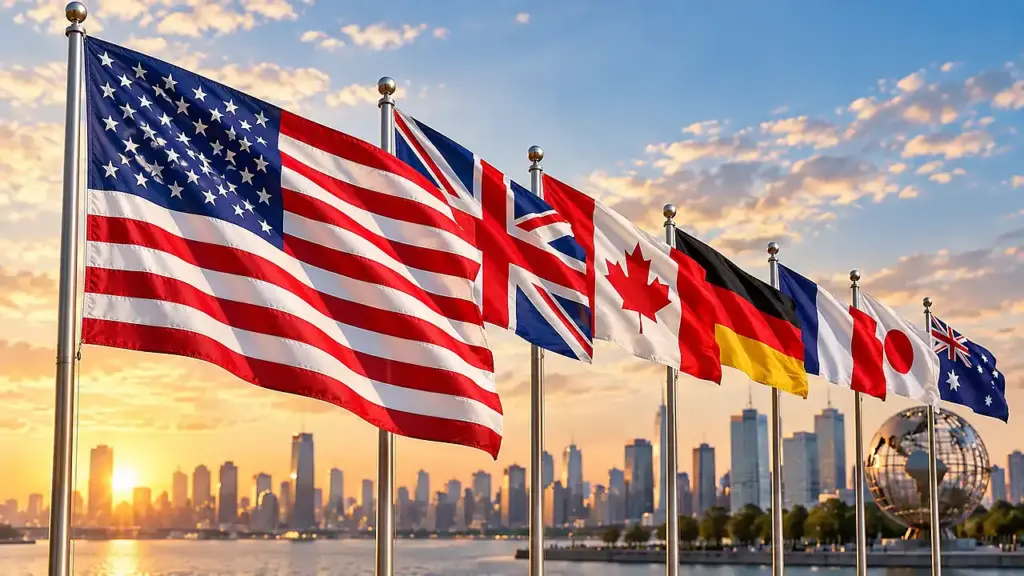
Multilingual Translation Services help organizations manage content that must be translated into several languages at the same time. Instead of treating every language pair as an unrelated project, a multilingual workflow coordinates terminology, style, file preparation, review and delivery across all target markets. This is especially important for websites, technical documentation, product launches, legal files, training material and international corporate communication.
Translation All World supports both widely requested and less frequently requested language pairs across European, Asian, Middle Eastern, African, Turkic and regional language groups. Each language is assigned to an appropriate specialist rather than being routed through a neighboring language simply because the languages are related. Projects can also include localization, terminology management and multilingual desktop publishing when scripts, right-to-left text or complex layouts are involved. The final workflow is built around the target markets, document type and required quality level.
What Are Multilingual Translation Services?
Multilingual Translation Services combine translation, localization, terminology control, review and project management across multiple target languages. A single source file may need to become ten or more market-ready versions, each with its own linguistic and formatting requirements. Central coordination reduces duplication and helps common terminology, product names and legal references remain aligned across the complete language set.
The workflow is not limited to major world languages. Less frequently requested languages may use different scripts, have smaller pools of specialist translators or require additional scheduling for certified work. Turkic, Caucasian, African and Central Asian languages can also involve regional variants or historical scripts that need separate expertise. A project manager should therefore match each language with the correct translator rather than assume linguistic proximity is enough.
Translation All World can coordinate English, European languages, Arabic, Chinese, Japanese, Russian, Persian, Turkic languages and other supported language pairs within one project structure. The specific language coverage and certification route are confirmed at quotation stage.
Which Projects Need Multilingual Translation Services?
Multilingual Translation Services are most useful when one organization needs the same content distributed across several countries. Product launches, international websites, manuals, training programmes, corporate policies and regulatory files can become difficult to manage when every language is commissioned separately with no shared terminology or version control.
The table below shows common multilingual projects and the coordination requirement that matters most in each case.
| Project Type | Examples | Main Coordination Focus |
|---|---|---|
| Websites | Corporate sites, e-commerce, landing pages | Localization, SEO terms and version control |
| Technical Documentation | Manuals, specifications, safety content | Shared terminology and file structure |
| Legal and Corporate | Policies, contracts, company records | Defined terms and jurisdiction notes |
| Training | Courses, presentations, e-learning | Consistent instructions and learner terminology |
| Product Launches | Packaging, brochures, product pages | Brand language and simultaneous delivery |
| Official Documents | Certificates and administrative records | Language-specific certification requirements |
Translation All World can use one central project brief while still allowing each language team to apply local terminology, script and cultural conventions where the target market requires adaptation.
How Are Less Common Languages and Scripts Managed?
Less frequently requested languages can require more planning than high-volume language pairs. The available pool of translators may be smaller, subject-matter specialists can be harder to schedule, and official certification may depend on local rules or individual translator credentials. These factors should be identified before the delivery date is committed.
Script also matters. Arabic and Persian use right-to-left writing, Chinese may require Simplified or Traditional script, Russian and several Central Asian languages can involve Cyrillic, and historical documents may use older orthographies no longer standard today. A multilingual project must account for these differences in file preparation, desktop publishing and quality control rather than forcing every language into one layout.
Translation All World assigns each language independently according to language pair, subject field, script and destination. Closely related languages such as Turkish and Azerbaijani, or Serbian and Croatian, are not treated as interchangeable. Where a rare language has limited certification availability, that constraint is clarified before production so the client can plan the correct submission route.
How Does a Multilingual Translation Project Work?
The project begins with the source files, full target-language list, target countries, deadlines and content type. A single approved source version is important because changes introduced after translation has started can multiply across every language. Existing glossaries and brand terminology should also be centralized before linguists begin work.
- Confirm the final source files, target languages, markets, subject field and delivery schedule.
- Create a shared terminology list, style guide and instructions for names, products and recurring phrases.
- Assign qualified translators for each language pair and subject area.
- Translate and localize each version while maintaining shared terminology where appropriate.
- Perform language-specific revision, formatting and quality checks, including script and layout review.
- Deliver coordinated files with clear language codes, versions and certification status where applicable.
Translation All World can also manage later updates through the same terminology and translation-memory resources so new versions do not restart the multilingual project from zero.
Questions identified during translation are resolved against the source file or client reference material rather than guessed. This review stage is particularly useful when names, abbreviations, handwritten notes or industry-specific terms appear differently across several documents in the same project.
How Do Terminology and Multilingual DTP Improve Quality?
Terminology management provides a common reference for product names, legal terms, technical components and brand language. The purpose is not to force identical wording across languages, but to make sure each language expresses the same approved concept consistently. A glossary can also record terms that must remain untranslated, official company names and country-specific exceptions.
Multilingual desktop publishing, often called multilingual DTP, addresses the visual side of translation. Text expansion, right-to-left scripts, different character sets and line-breaking rules can change the appearance of brochures, manuals, forms and presentations. A linguistically correct translation can still be unusable if labels overlap, tables break or characters are missing from the chosen font.
Translation All World can combine linguistic review with layout checks for multilingual deliverables. Files are reviewed in their final format so language, typography, numbers, images and page structure work together rather than being treated as separate stages.
These resources are especially valuable when the same content is updated over time. A controlled terminology base and final-format review reduce rework, preserve approved wording and help new releases match earlier multilingual materials even when different linguists join the project.
Frequently Asked Questions
Can one project include both common and less common languages?
Yes. A multilingual project can combine high-volume languages with less frequently requested pairs. Scheduling and certification availability may differ by language, so the full language list should be confirmed early enough to assign appropriate specialists and plan delivery realistically. The complete language list, target markets and final formats should be confirmed early so specialist availability, review and certification can be planned consistently.
Should related languages use the same translator?
Not automatically. Related languages can still have different grammar, legal terminology and established usage. Each target language should be assigned to a qualified specialist. Shared terminology can coordinate concepts without treating separate languages as interchangeable versions of one another. The complete language list, target markets and final formats should be confirmed early so specialist availability, review and certification can be planned consistently.
What is multilingual DTP?
Multilingual desktop publishing adapts designed files after translation. It handles text expansion, right-to-left scripts, character sets, tables, captions and page layout so brochures, manuals, forms and presentations remain readable and visually correct in every target language. The complete language list, target markets and final formats should be confirmed early so specialist availability, review and certification can be planned consistently.
Can terminology be shared across all languages?
Yes, through a central concept-based glossary. Each language receives its approved equivalent while product names, protected terms and exceptions are documented. This helps different language teams translate the same concepts consistently without forcing unnatural literal equivalents. The complete language list, target markets and final formats should be confirmed early so specialist availability, review and certification can be planned consistently.
Do certification rules stay the same across languages?
No. Certification depends on the destination authority, document type and jurisdiction, not simply the language. A multilingual official-document project may therefore require different translator credentials or formal steps for different target countries even when the source document is identical. The complete language list, target markets and final formats should be confirmed early so specialist availability, review and certification can be planned consistently.